Messaging guide approved
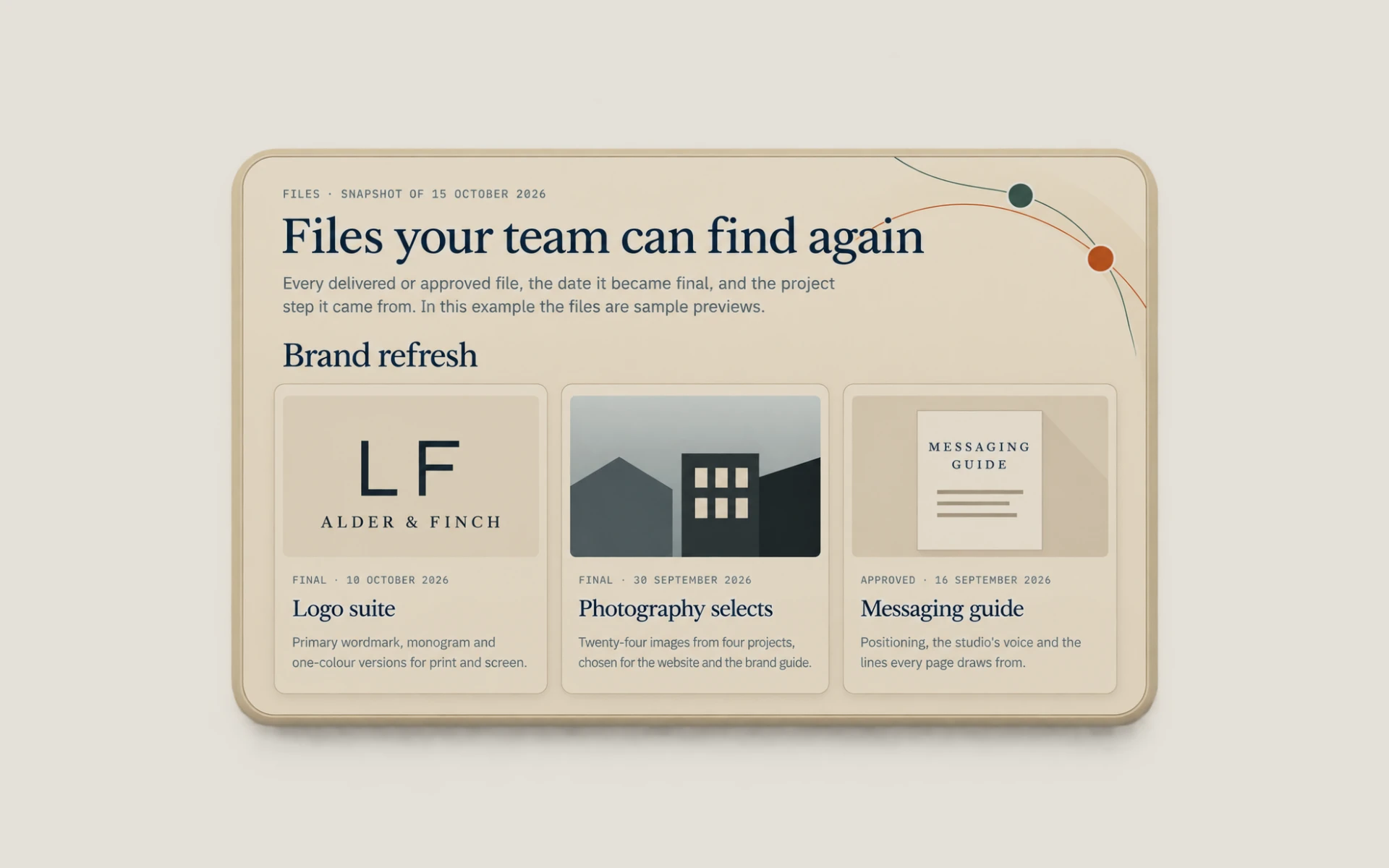
Positioning, the studio’s voice and the lines every page draws from. The approval shows on Overview, Files and History.
Alder & FinchNamed
Brand refreshDated
Ana ReyesSourced
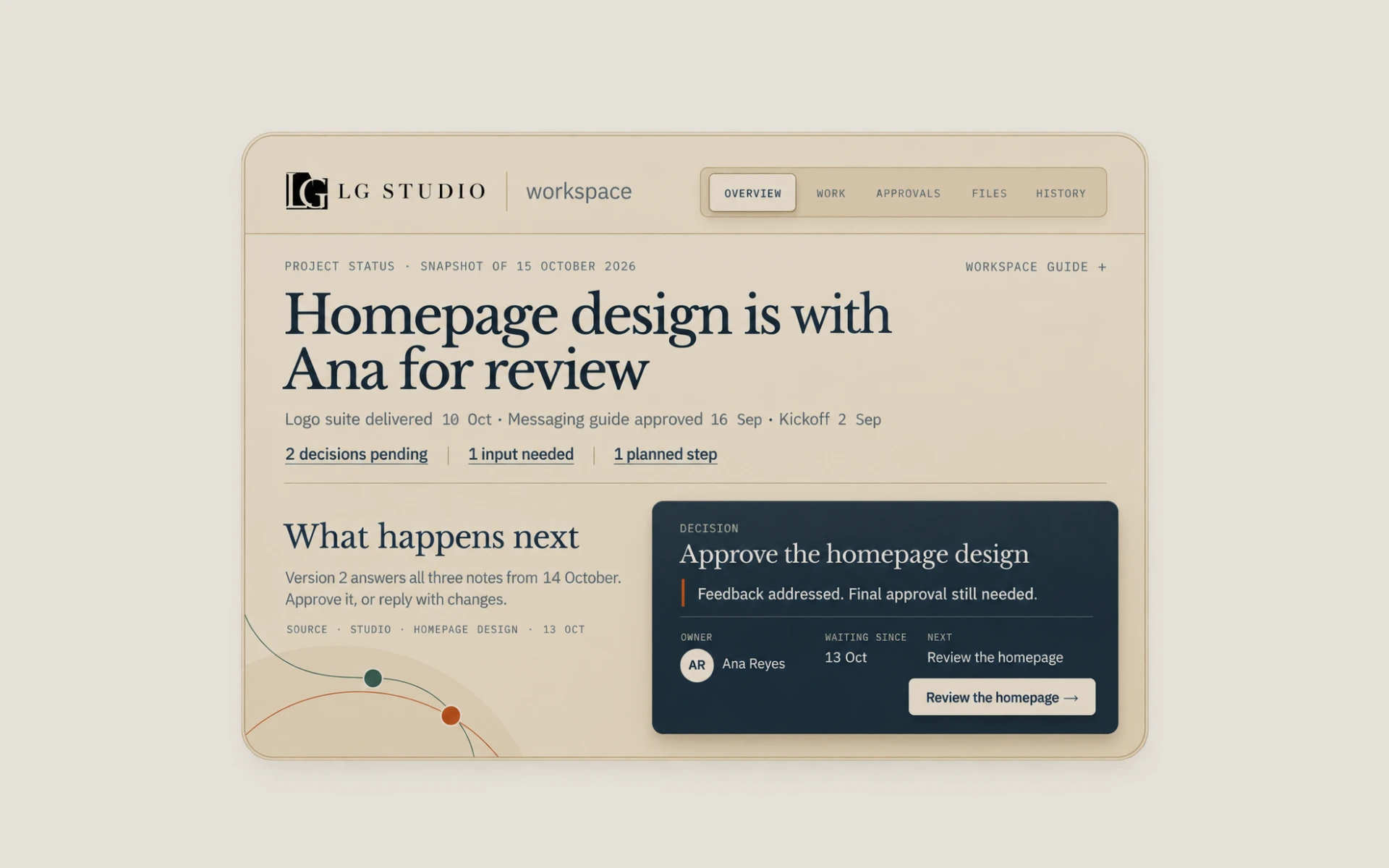
Clients shouldn’t have to wonder where the work stands. So every LG Studio project gets its own workspace, where status, decisions, files and the next step live together. We call it the Kitchen.
Backed by one record of what happened, who confirmed it, when, and where it came from.
If a client has to ask where things stand, the Kitchen hasn’t done its job.
Running on client work, open as a demo, and described by two clients in their own words.
On most projects, a client’s clearest view of the work is whatever reached their inbox last. Status lives in threads. Decisions live in someone’s memory. The next step depends on who you ask.
A project can be on track and still feel uncertain from the outside. That uncertainty costs trust, and it lands on the person who has to explain the project to everyone else.
Before it is a performance problem, it is a visibility problem

Nunca tuve que preguntar en qué iba el proyecto.Abría el espacio y ahí estaba todo: lo que faltaba, lo que ya habíamos decidido y lo que seguía.
I never had to ask where the project stood.I’d open the workspace and it was all there: what was left, what we’d decided, and what came next.
The answer had to be simple enough to say in a sentence: every project gets its own workspace. Giving it a plain name mattered as much as building it. We call it the Kitchen, the place where the work is actually made.
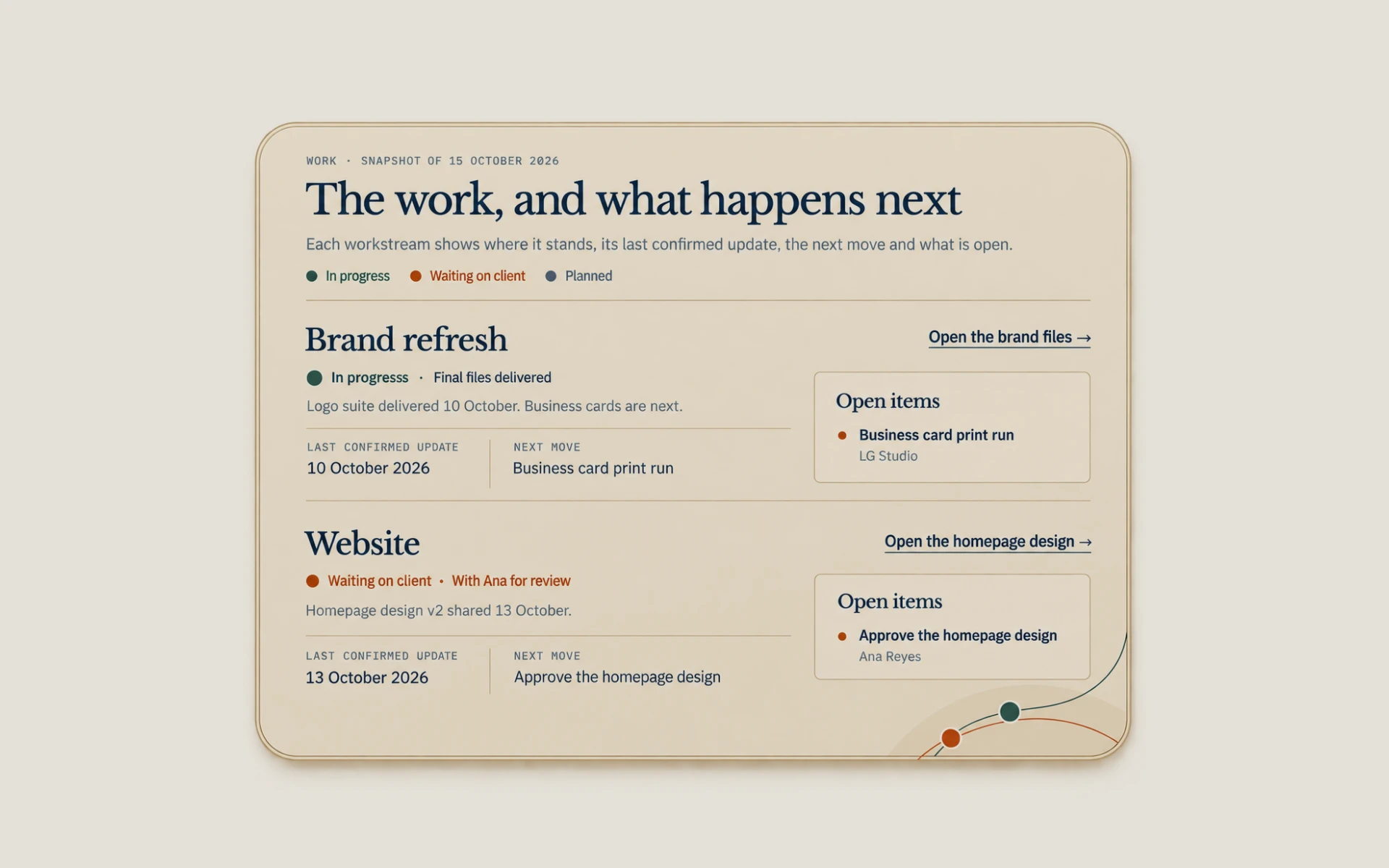
Where every deliverable stands, and what happens next.
Every decision dated, with who made it and where it came from.
Files, feedback and the next step, in one place.
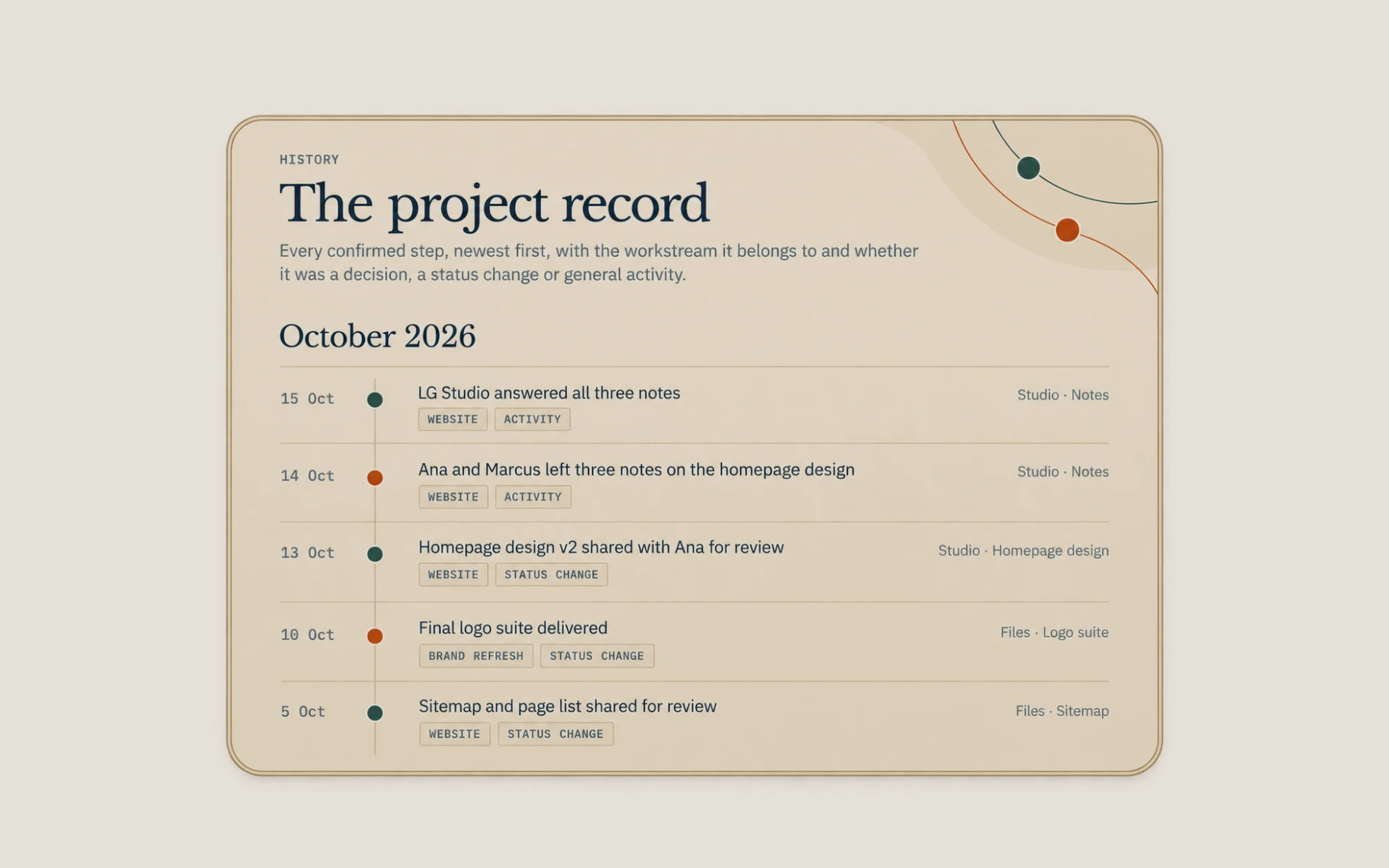
Underneath the workspace sits a single ledger. Each entry records what happened, who confirmed it, when, and where the confirmation came from: an email, a meeting, a confirmed message.
Every page reads from that one record, so status, timeline and decisions never disagree with each other. Anything ambiguous waits for confirmation before it reaches the client’s view.
What belongs in the shared record is a deliberate choice. The client sees what helps them act; studio business stays on the studio’s side.
The system keeps the record. Luis reads what belongs in it.
Positioning, the studio’s voice and the lines every page draws from. The approval shows on Overview, Files and History.
Every page reads the same record, so status, timeline and decisions never disagree
The Overview opens with one status statement and one featured action: the single thing that needs the client now. Below it, a compact list of every item in plain words, the item and then where it is, and workstreams that each answer two questions: where are we, and what’s next.


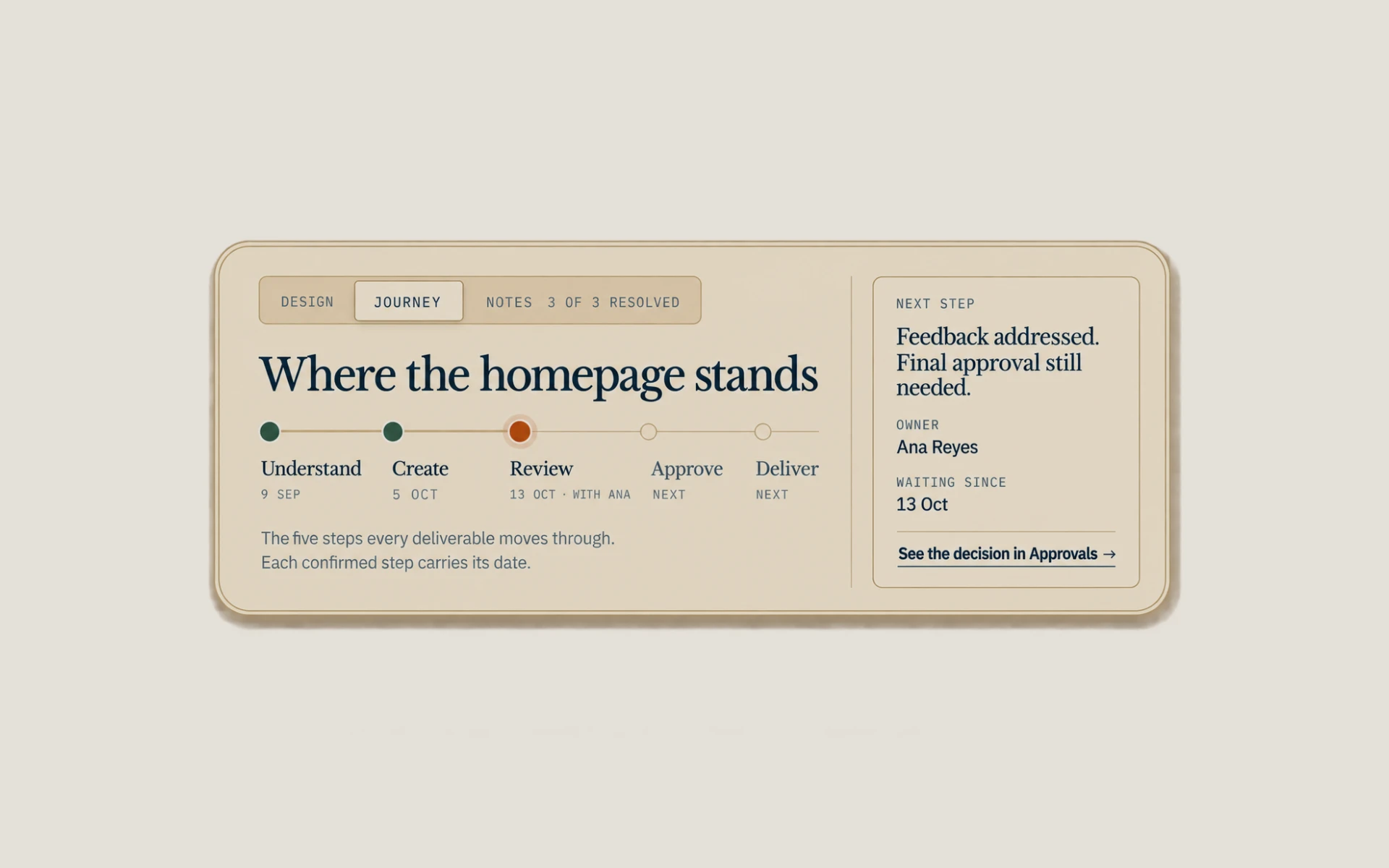
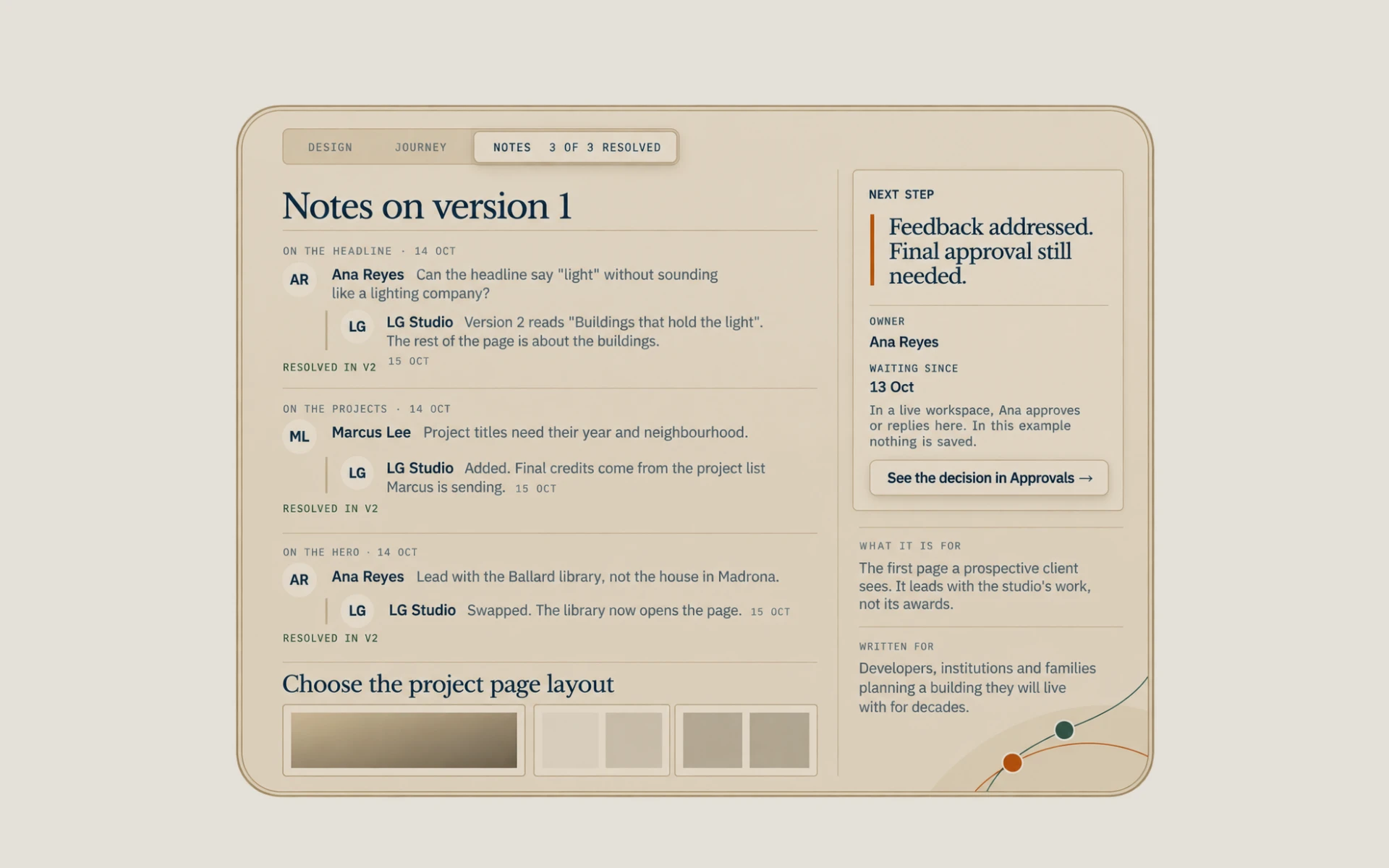
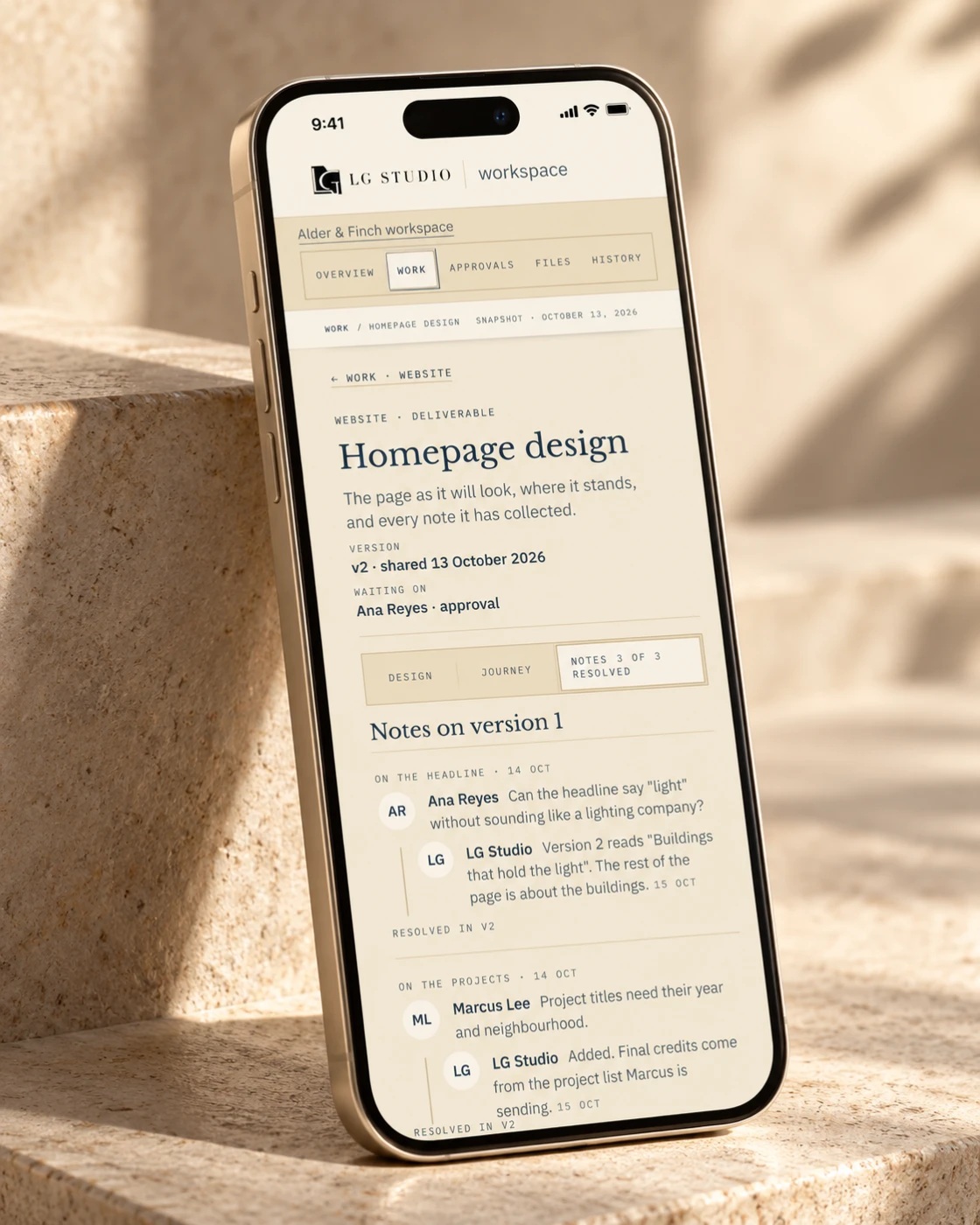
The clearest way to show a visibility system is to show something move. This is the homepage design in the Alder & Finch demo, step by step, exactly as the client sees it.
Ana and Marcus leave feedback on the design itself, not in an inbox.
“Can the headline say ‘light’ without sounding like a lighting company?”
Ana Reyes · 14 OctVersion 2 resolves each note, and the Overview says so before anyone asks.
“Version 2 reads ‘Buildings that hold the light’.”
LG Studio · 15 Oct · Resolved in v2The approval waits with its owner. When Ana says yes, it’s logged: named, dated, sourced.
Approve the homepage design
Owner Ana Reyes · Waiting since 13 OctThe usual way to show how a studio works is to describe it. We built a working Kitchen for a client that doesn’t exist, Alder & Finch, so anyone can walk through the real thing before a first conversation.
No sign-in, no gate. Anyone can open it.
Explanation cards walk through each page.
Tour cards switch to Spanish; the interface stays in English.
Invented names and activity. No client’s work on display.
Live · demo · Guided · tour · Heard · client voices

Lo que más me dio fue tranquilidad.Sabía qué me tocaba decidir a mí y qué ya estaba en marcha, sin tener que perseguir a nadie.
What it gave me most was calm.I knew which decisions were mine and what was already moving, without chasing anyone.
The system itself, and the clients who have worked inside it. Open it and see the rest.
The Kitchen is how LG Studio runs client work today. Two clients have said what it changed for them; the next story will be told with that client’s permission.
The Kitchen demo goes live. Alder & Finch, open to anyone, no sign-in.
Release #24ConfirmedA guided tour explains every page.
Release #25ConfirmedTour cards switch to Spanish. The interface stays in English.
Release #27ConfirmedErika Sharnay and Nari Fateha approve their words for this page.
Client approvalConfirmedThat the same holds on a larger engagement, told with that client’s permission.
PendingThat the record stays trusted as projects grow longer and busier.
PendingThat prospects who open the demo arrive at the first call already knowing how we work.
GoalThe work was always happening. Now the client can see it.
We turn trusted expertise into clear experiences, useful products, and systems that keep learning after launch.